
AI Is Changing How Capital Gets Put to Work — Without Requiring You to Watch the Market All Day
Atlas Trade AI is institutional-grade AI trading infrastructure, currently available to qualified investors who want a more disciplined, hands-off way to put capital to work.

Chairman of the U.S. SEC
Built Around U.S. Regulatory Standards
Atlas operates exclusively within SEC, CFTC, and FTC frameworks through U.S.-based, SIPC-insured and FINRA-protected brokerages.
Atlas never has access to your capital. You retain 100% control of your funds with the freedom to withdraw whenever you like, while the AI handles the automated trading on your behalf.
Click Here to Review the SystemBecause at the end of the day, it’s your money — and no one is going to care about it more than you do. So naturally, a lot of people start by looking into trading on their own — watching videos, learning charts, trying to understand how it all works. At first, it can feel promising, especially on a demo account. But once real money is involved, things tend to change quickly. Constantly watching screens, trying to time entries, second-guessing decisions — getting in and it drops, waiting and it runs without you.


For many, it becomes exhausting, draining, and frustrating, especially when the results aren’t consistent. And over time, it starts to become clear why — it’s not just the market being difficult, it’s the reality of competing against speed, algorithms, and institutional systems that operate on a completely different level. So naturally, the focus shifts. A lot of people move toward more traditional options. Property, for example, is often seen as “safe,” “reliable,” and “passive.” But the reality tends to be different — capital gets tied up, problems come up, and it demands attention. It’s rarely as hands-off as it’s made out to be. The same goes for stocks and long-term investing. Buying and holding, hoping it compounds over time — but in practice, it often feels like guesswork. Following something seen online, or what “everyone else is buying,” and hoping the timing was right.
At that point, the thinking often shifts. Maybe this isn’t something that should be handled entirely alone. So many people look toward more structured routes — financial advisors, wealth managers, professionals who are supposed to know what they’re doing. On paper, it sounds reassuring. But in reality, it doesn’t always feel like progress. Returns can barely move the needle — sometimes not even keeping up with inflation — while fees are taken regardless. In some cases, there are profit splits as well, where a percentage of the upside is given away despite it being your capital at risk. There’s a reliance on “experts,” but without outcomes that justify it. And that’s where frustration tends to build. Because the “safe” and “sensible” route doesn’t necessarily lead to better results — it just feels like a different version of the same problem. So the search continues.

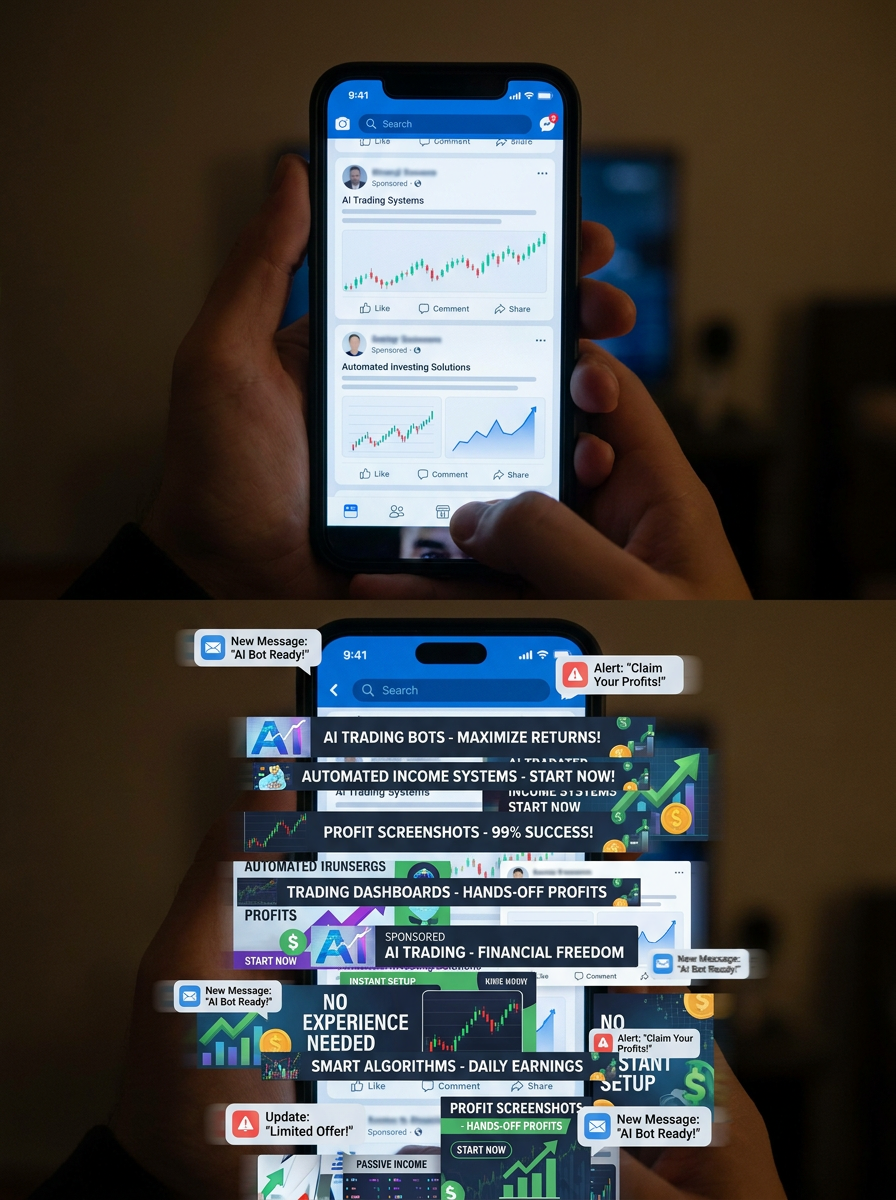
That’s when AI trading starts to come into the picture. Automated systems, bots, “hands-off” solutions — on the surface, it sounds like exactly what’s been missing. But then one ad turns into ten… ten into a hundred. And before long, people find themselves being bombarded — Facebook, YouTube, emails — endless companies all saying the same thing, all showing results, all claiming they’re different. It becomes overwhelming. More noise. More fluff. More claims. And the more that’s seen, the less any of it feels trustworthy. Everything starts to look too polished. Too perfect. Too good to be true. So naturally, people dig deeper. And that’s when the reviews show up — accounts blown, poor risk management, no real stop losses. People putting money in and watching it disappear because what was promised didn’t match reality. And that’s where the hesitation really sets in: If it’s really that good… why isn’t there a way to evaluate it before fully committing? But even with that question sitting there, one thing doesn’t go away. The sense that something still needs to change. Because leaving things as they are doesn’t feel right either. So it becomes a case of weighing everything up — knowing there has to be a better way, but being far more aware of what to avoid. And at that stage, it’s no longer about chasing quick wins or taking unnecessary risks. It becomes: How do you put your capital to work in a way that feels consistent, reliable, and built for the long term… without managing it every day… while preserving what you’ve already built, compounding over time, and keeping the flexibility to generate income when you need it?
And that’s exactly why Atlas exists — to give serious investors a clearer, hands-off way to access AI-driven trading, while keeping full control of their own funds.
So instead of relying on another polished claim, you can see how it works first — and if it feels like the right fit, you’ll have the option to test it before fully committing.
🔴 YOU WILL SAY GOODBYE TO
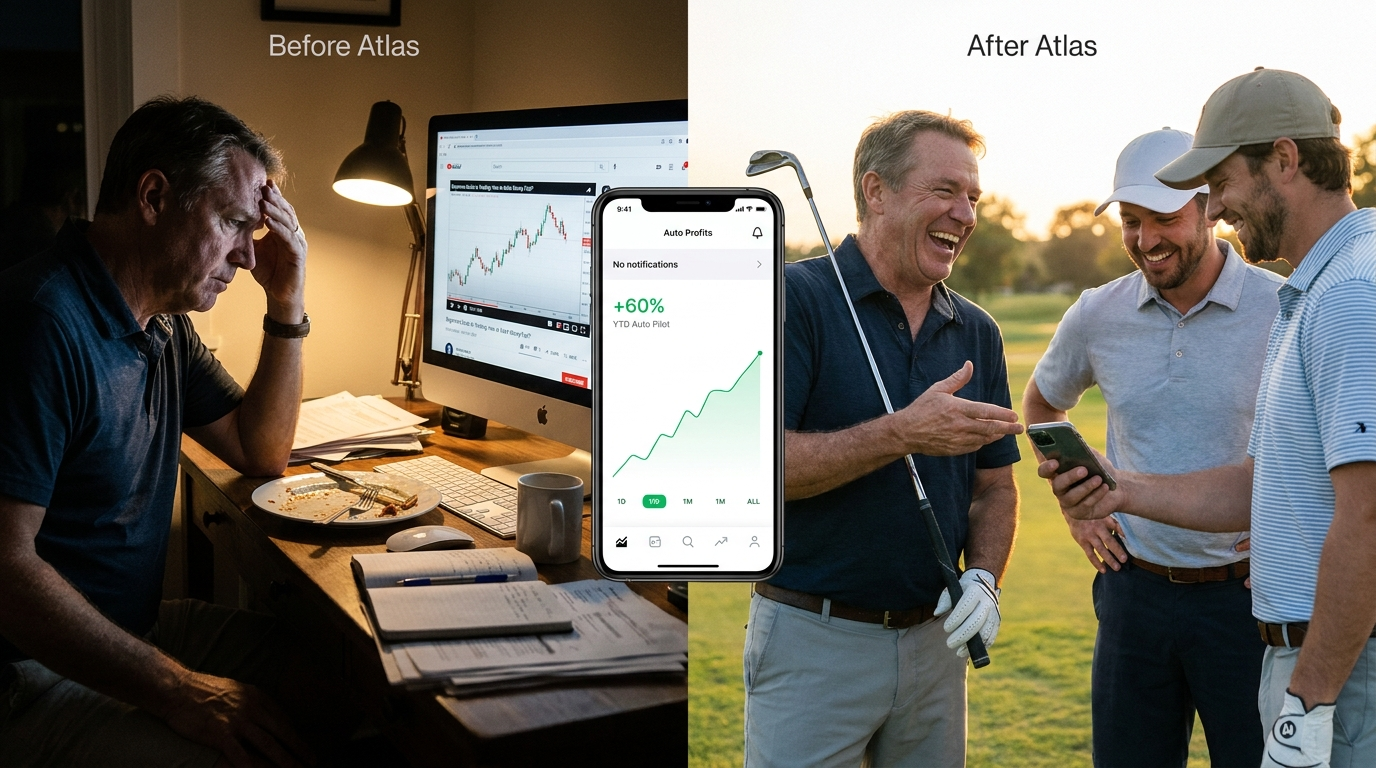
- The quiet anxiety around financial decisions… and that sinking feeling in your chest knowing you might have to admit — again — you’ve put family money in the wrong place
- The constant pull to check charts and “stay on top of it”… eyes strained, mind racing — only to watch yourself slip into deeper drawdowns with nothing to show for it
- The exhausting loop of trying one investment after another… each one sounding right at the time — until you’re left staring at the same disappointing result
- That nagging feeling you’re falling behind… hearing everyone talk about AI, knowing you should be using it — but not knowing what’s real, what’s hype, or who to trust
- The weight of figuring it all out alone… second-guessing every step, with no clear direction and no real confidence in where you’re heading
🟢 YOU WILL GAIN
- The option to test the system before fully committing — so that underlying doubt is alleviated and you can move forward with clarity
- Emotion-free execution handled for you — so the noise, the stress, and the constant second-guessing finally quiet down
- A structured, proven system built for consistency and long-term reliability — so you’re no longer chasing, switching, or hoping something finally works
- Access to institutional-grade AI infrastructure — putting you ahead of the curve with the kind of technology Wall Street has kept under wraps
- Technology that does the work for you, with a dedicated human there for communication whenever you need it — so you’re never left in the dark
Real people. Different starting points. Same shift.

“I had charts open constantly, trying to stay on top of everything. My eyes were sore from staring at the screen, and the mental fatigue started to build. I felt drained, always thinking about trades, even when I wasn’t at my desk. If I got in late, I’d chase it. If I got in early, I’d question it. It started affecting my day to day, I was distracted, short with people, and constantly second-guessing myself. Despite all that time and energy… the results still weren’t consistent. Now, I don’t spend time watching charts or thinking about trades. It just runs, and for the first time, it actually feels consistent and something I can rely on without it taking over my day.”

“I’d built up my capital over the years, so it wasn’t about chasing anything big. It was more about making sure it was actually working. I looked into the usual things, advisors, longer-term investments, even thought about property at one point. But nothing really gave me confidence. The returns felt slow, and I never fully knew what was actually happening with my money. It felt like I was just relying on someone else and hoping it was the right decision. That didn’t sit right with me. I didn’t want to be checking things all the time or worrying about whether I’d made a mistake. I just wanted something simple that I could trust. So I stepped back from all of it. Now it feels a lot more straightforward. I’m not constantly thinking about it or trying to figure out what’s going on. It just runs in the background, and for the first time, it actually feels consistent without adding any stress. Atlas has helped me retire comfortably.”

“I’d looked into a few different options over time, bits of investing, a couple of systems, even some automated tools. The problem was, none of it was ever as hands-off as it sounded. There was always something to check, adjust, or keep an eye on. And with everything else going on, it just wasn’t realistic to stay on top of it. So things would start… then stop. Or I’d leave something running without really knowing if it was doing what it should. I also came across a lot of AI trading bots. At first, it sounded ideal, something that runs without needing constant input. But the more I looked, the more it all blended together. Same claims, same results, same promises. Then I started noticing the details. A lot of them required using offshore brokers. Some were pushing high leverage — 1:100, even 1:500. That didn’t sit right with me. It just felt like unnecessary risk, especially when you’re putting your own capital in. So I held off. Now it’s completely different. I don’t have to think about it or fit it into my day. It just runs, and I can check in when I want to, not because I have to. I still have full control of my money, can withdraw whenever I need to, but I’m not the one having to manage the trades. That’s the main difference for me.”